
IAMC Hyderabad and RPC Host Fireside Chat on AI, Advocacy and Adjudication – Are the Guardrails Sufficient?
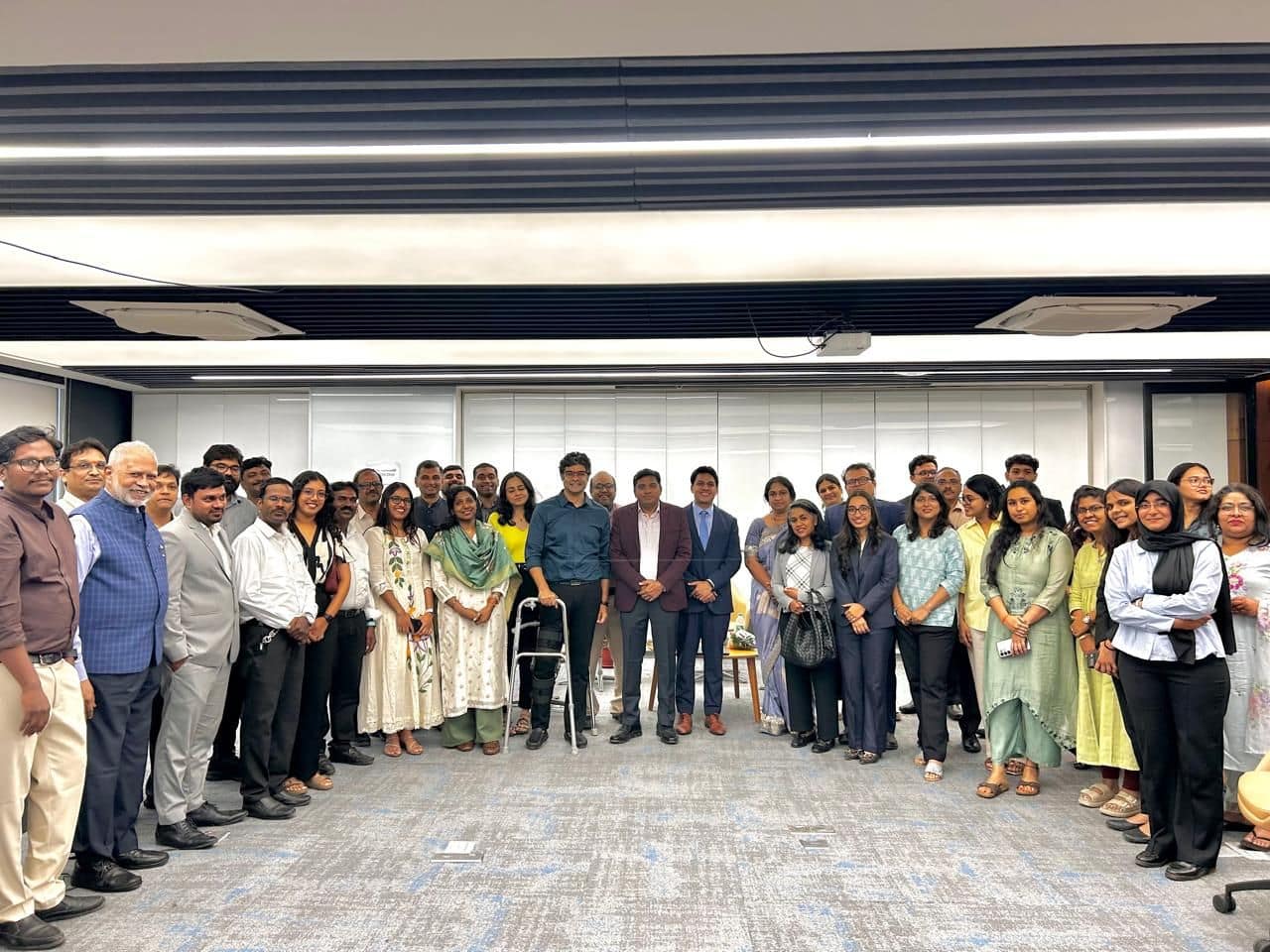
HYDERABAD, 25 July 2026 –The International Arbitration and Mediation Centre, Hyderabad (IAMC), in collaboration with RPC, hosted an exclusive fireside chat titled “AI, Advocacy and Adjudication: Are the Guardrails Sufficient?” on Saturday, 25 July 2026 at IAMC, Hyderabad.
Held at the IAMC premises in Hyderabad, the session drew an engaged gathering of over 50 participants, comprising senior advocates, renowned advocates, law firm partners and senior counsels from in and around Hyderabad, reflecting strong interest within the legal community in the intersection of artificial intelligence and legal practice.
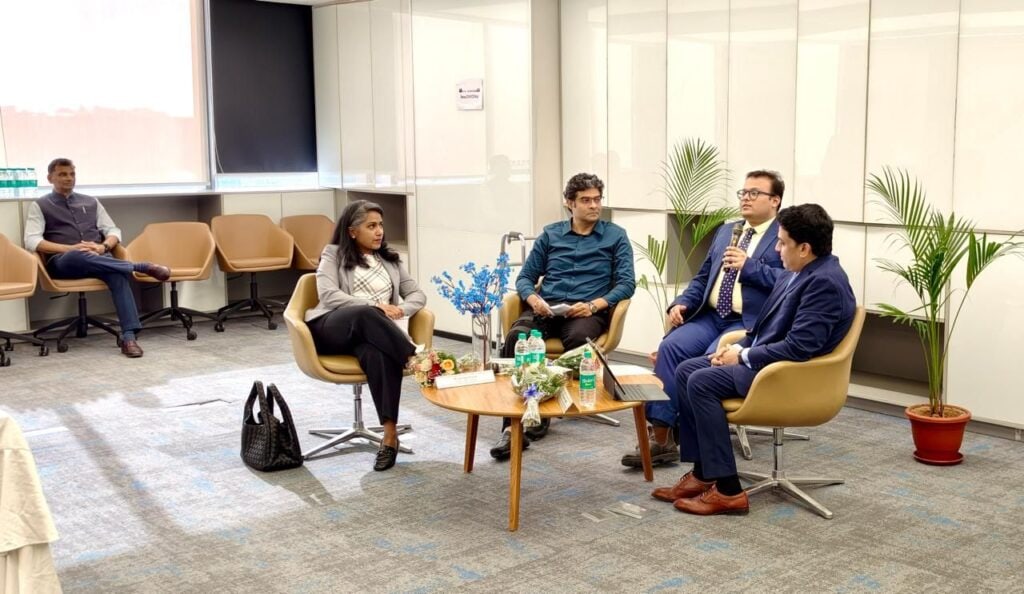
The panel featured Mr. Krishna Grandhi, Senior Advocate at the High Court of Telangana; Ms. Kirtan Prasad, Partner at RPC Legal, London; and Mr. Roopam Verma, Partner at IRIS Legal, Hyderabad. Structured as a conversational fireside chat rather than a formal panel discussion, the session allowed the three speakers to build on one another’s perspectives, bringing together views from the Bar in India alongside an international, cross-border outlook.
Mr. Verma opened the conversation by unpacking how large language models, the core framework underpinning most AI systems today actually function, and was candid about their limitations. He pointed out that AI has no real concept of truth, reasoning or judgment, that outputs can be affected by hallucination, and that models inherit the biases embedded in the data they are trained on. He also flagged the risk of “automation bias”, an over-reliance on technology that can erode independent judgment and cautioned against leaving genuine innovation to AI systems.
If innovation is left for AI to do, it will be dangerous.
— Mr. Roopam Verma, Partner, IRIS Legal
The discussion then turned to where the technology is headed. Mr. Grandhi spoke about the shift from AI to artificial general intelligence (AGI) – systems capable of replicating human cognitive functions at scale – predicting that AGI, rather than AI, will dominate the conversation in the years ahead. He set out transparency, explainability, accountability and fairness as four qualities any AI system used in legal practice must have, and, referencing a Supreme Court judgment authored by Justice Narasimha, stressed that once thinking itself is delegated to a machine, the line between human and machine judgment disappears.
If we delegate our thinking to AI, there is no difference left between humans and machines.
— Mr. Krishna Grandhi, Senior Advocate, High Court of Telangana
Ms. Prasad brought an international, cross-border lens to the discussion, noting that law firms are increasingly adopting off-the-shelf legal AI tools alongside bespoke solutions, with transactional teams moving faster than litigation practices, where verification by senior lawyers remains essential. She was emphatic that confidentiality remains a central concern, that firms must rely on self-regulation and enterprise-grade safeguards rather than assume protection by default, and cited a recent UK case in which hallucinated case judgments were submitted to court as a cautionary example for the profession.
AI is a cautionary tale.
— Ms. Kirtan Prasad, Partner, RPC Legal, London
Across the discussion, the panel returned repeatedly to the idea of keeping a “human in the loop” – using AI to assist with document review, summarization and case law research, while insisting that final judgment, decision-making and questions of policy remain matters for human lawyers and judges to determine. The panel also touched on the evolving patchwork of guidance in this space, including state-level and Supreme Court-level guidelines in India and emerging standards from international arbitral institutions.
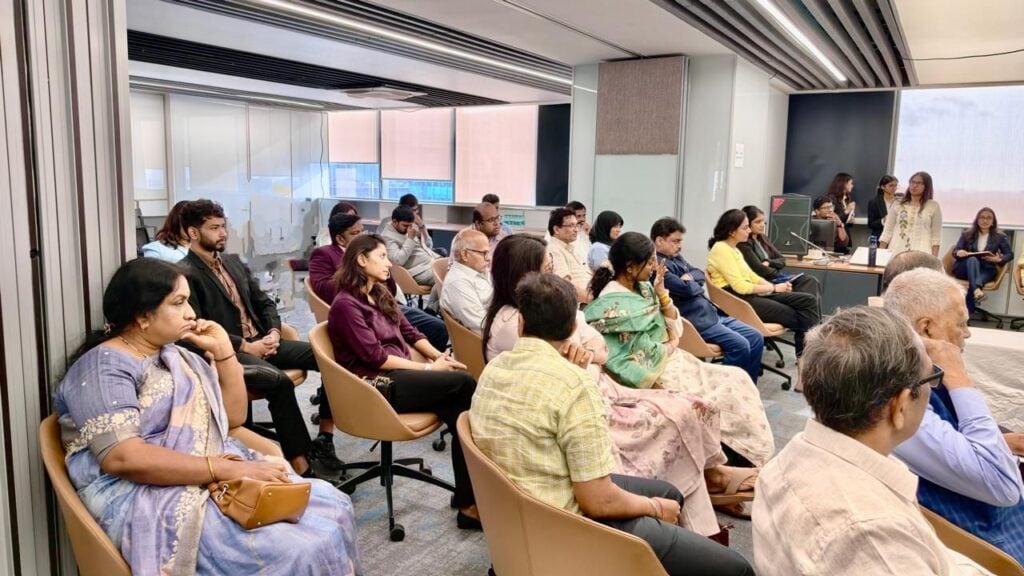
The session concluded with an interactive Q&A, with several senior members of the audience posing questions and sharing their own perspectives, making for a lively and wide-ranging exchange. The discussion was well received by attendees, who welcomed the candour of the panel and the opportunity for direct engagement with practitioners at the forefront of AI’s intersection with law.